
Course: Studio with Jarah Moesch (MFA, PhD)
Group Members: Fiona Clarke, Sonya Heldman, Meghan Huang, Nampoina Randrianarivelo, Owen Xu
Position: Bokashi Composting Lead
Project Theme: Designing for the Anthropocene – Food as Infrastrucutre Group
Project At a Glance: Establishing collaboration agreements, Defining the problem space, Collaborating with external stakeholders, Prototypes, Documentating project pivots, Creating instructional materials
What is “Food as Infrastrucutre?”
As a group, we defined food as infrastructure as:
“the production, processing, storage, distribution, retailing, consumption, and waste management of products within the food system.
It is a ‘life cycle’ that consists of the agricultural practices, consumption, and waste management of food.”
The Collaboration Agreement
As a project requirement, we practiced co-authoring a collaboration agreement before starting the project to ensure we all mutually agree to collaborate and communicate. The agreement included basic information such as contact info, project deadlines, and standing meeting schedules. The agreement also communicated our access needs, desired responsibilties/learning goals, and even our personal connections to food.
Nampoina’s goals for the project as an individual contributer:
Hands on prototyping and utilizing technical engineering experience (CAD, 3D printing, product testing, systems design, etc)
Defining the Problem Space
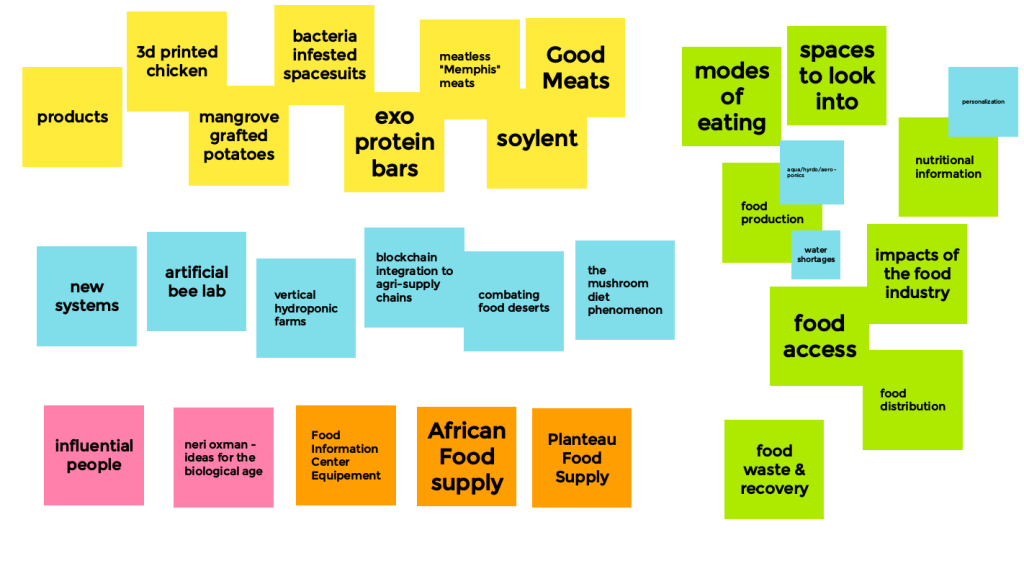
To help narrow down our focus as the “food as infrastructure” group, we collectively brainstormed ideas for what food-related topics we were interested in. Being able to visualize our similar and different ideas helped us narrow our problem space to food waste and recovery.
Collaborating with External Stakeholders
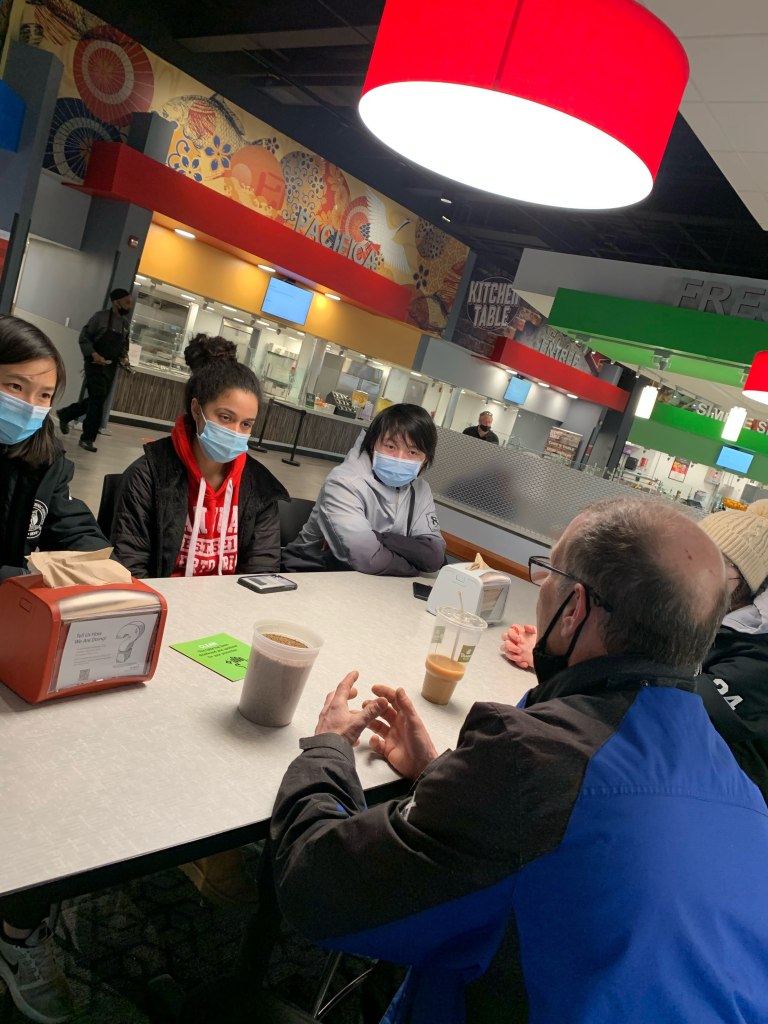
We were mentored by RPI/Sodexo’s Freight Farm director, Chris Mansfield. A Freight Farm is a fully functional hydroponic farm built inside an up-cycled shipping container.
Currently, Freight Farms are configured for the growth of only leafy greens, thus our project entails extensive research about the growing methods for other “heartier” vegetables such as carrots using Bokashi compost as a growing medium.
Prototype 1: What is and How to: Bokashi Composting
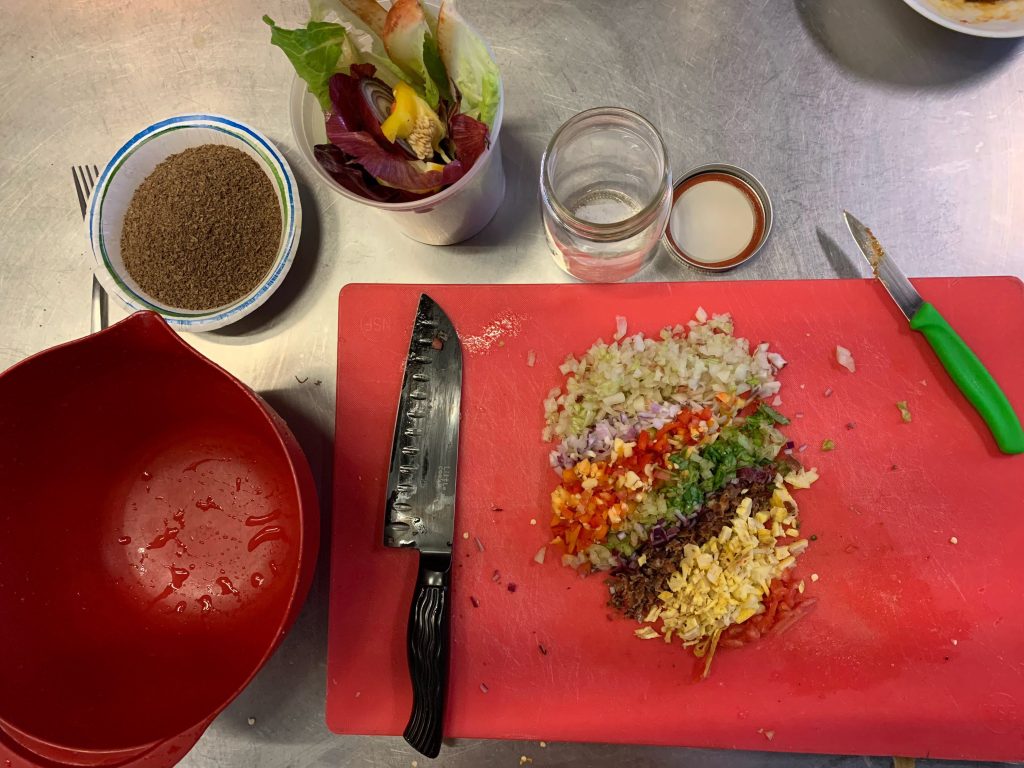
Our project mentor, Chris, is an expert in Bokashi composting and showed us the composting method and I took the lead developing and documenting the process and running the experiment.
What is Bokashi Composting?
Made in Japan in the 1980s, Bokashi is a composting method which utilizes enzymes to break down organic matter. Unlike oxygen-fueled vermicompost with worms, Bokashi utlizes Bokashi bran and fermentation to make fertilizer.
Advantages of Bokashi include faster compost time (about 14 days), minimal odor, the ability to compost meat and dairy products, and the ability to compost in small spaces.
The outcome of composting is two fold:
- Bokashi tea:
- A nutrient-rich liquid that can be added to your plants once diluted
- Dilute 2-3 ounces of the bokashi tea per gallon of water and add to the soil
- Pre-compost:
- Partially broken down organic matter that has been pickled by the fermentation process
- Once the bokashi compost process is complete, remove from container and let aerate for 24-48 hours to further break down, then add it to soil
How to Bokashi Compost:
Protype 1 Lead: Nampoina
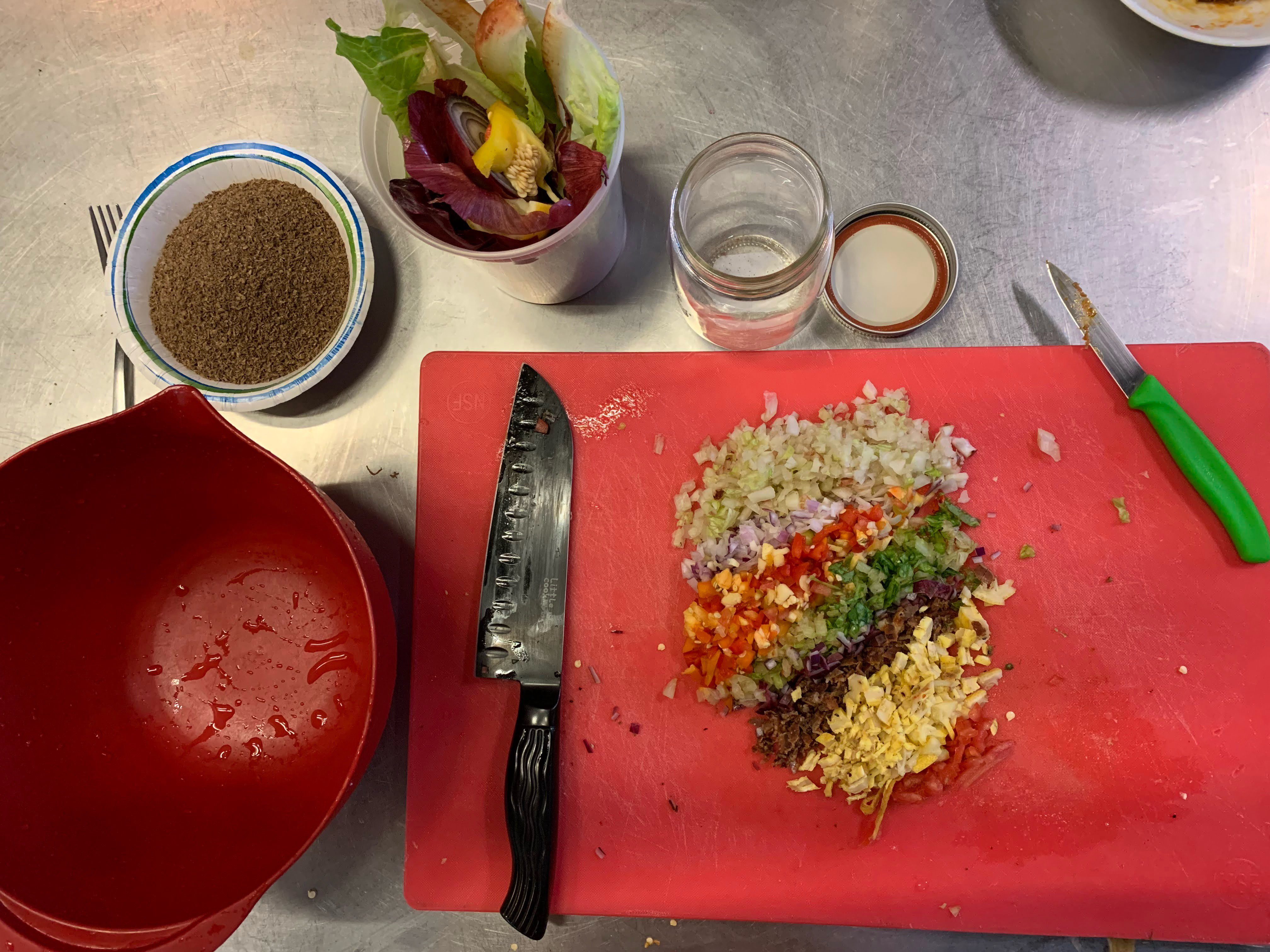
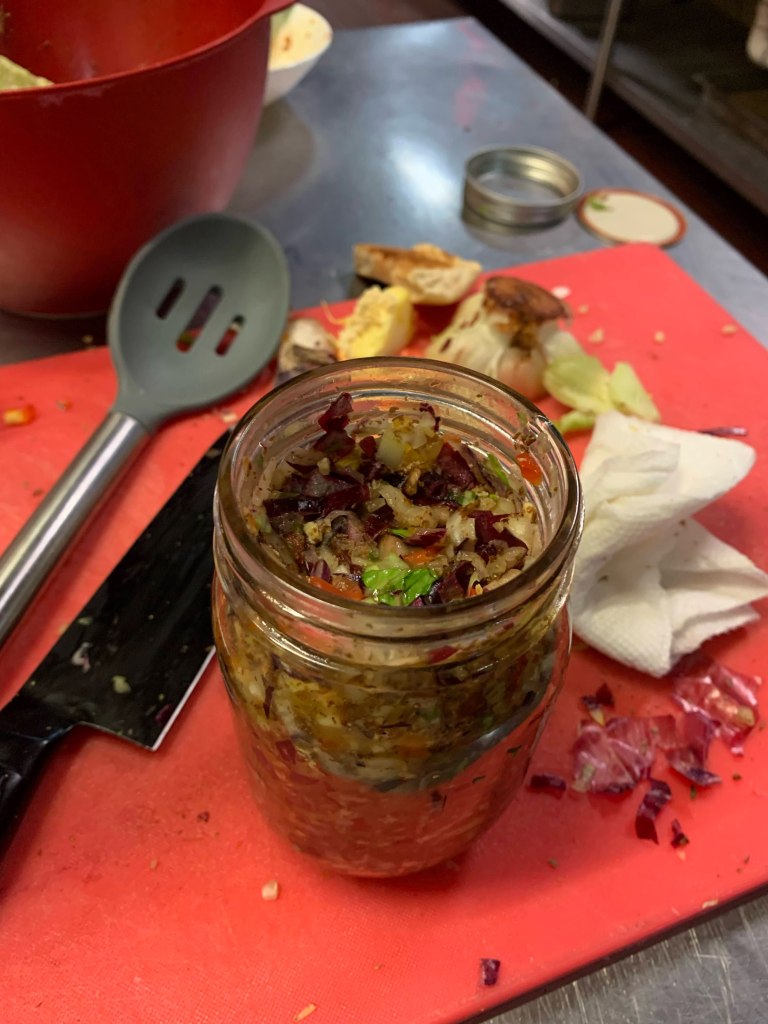
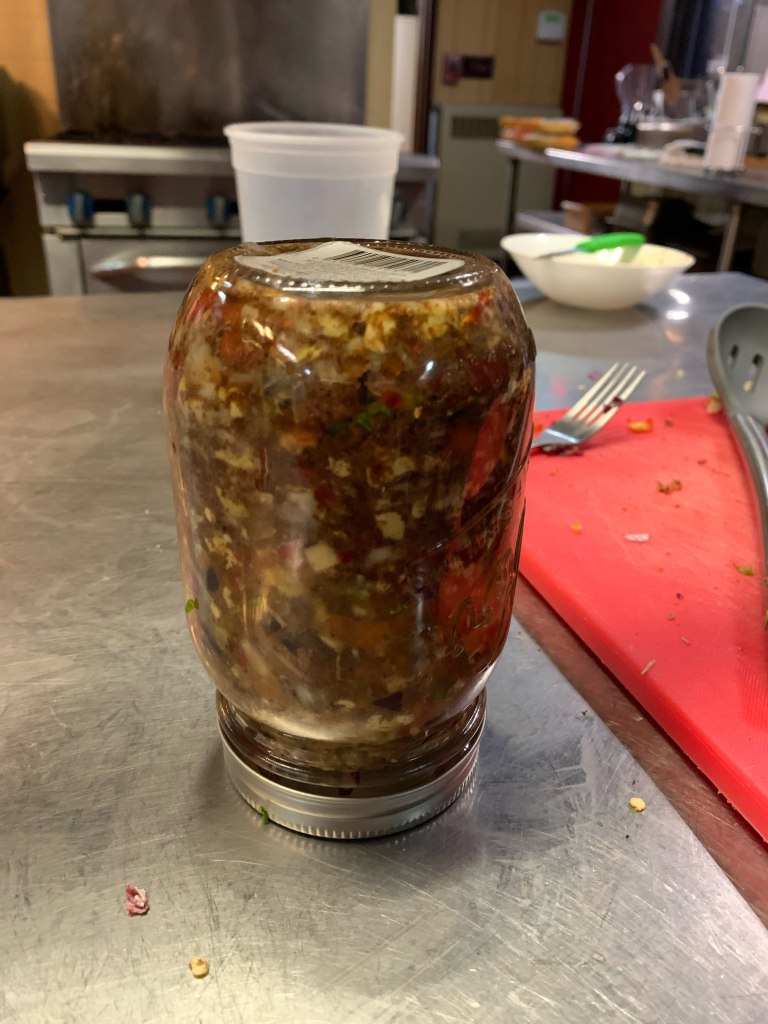
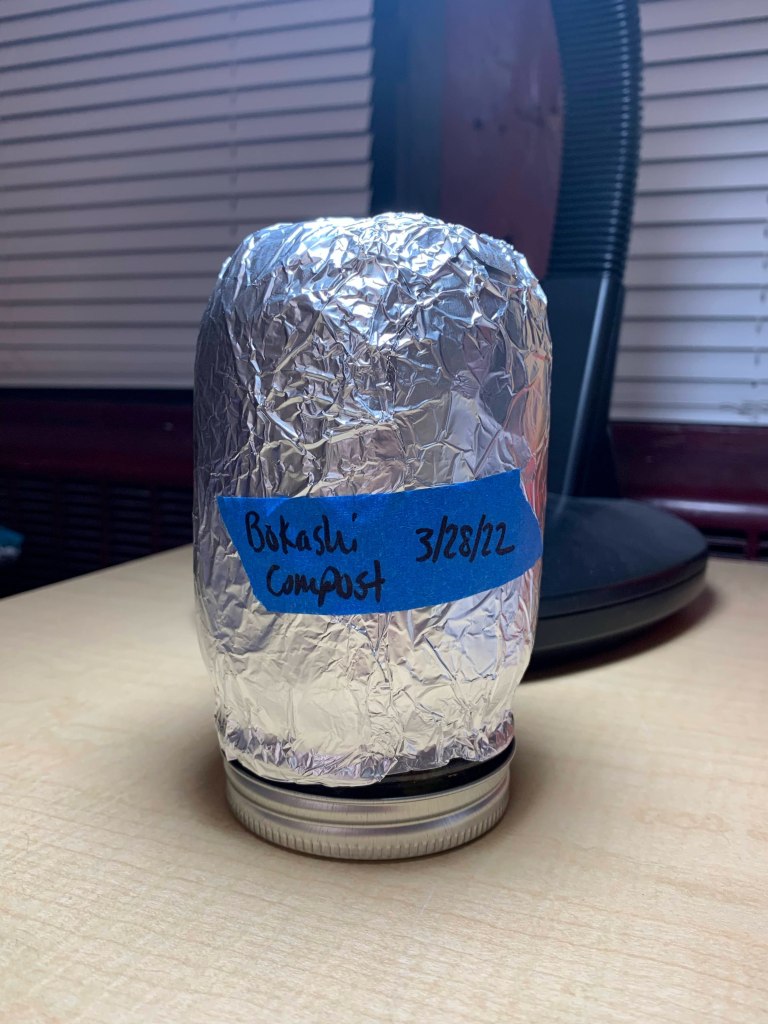
Steps:
- Order Bokashi bran
- Bokashi bran is a dry product that is usually made of a mix of essential microbes, water, sugar, wheat bran and rice bran
- You will need to store it at room temperature and avoid any possibility of it freezing.
- Choose an appropriate container
- Preferaby an opaque container that allows for easy drainage
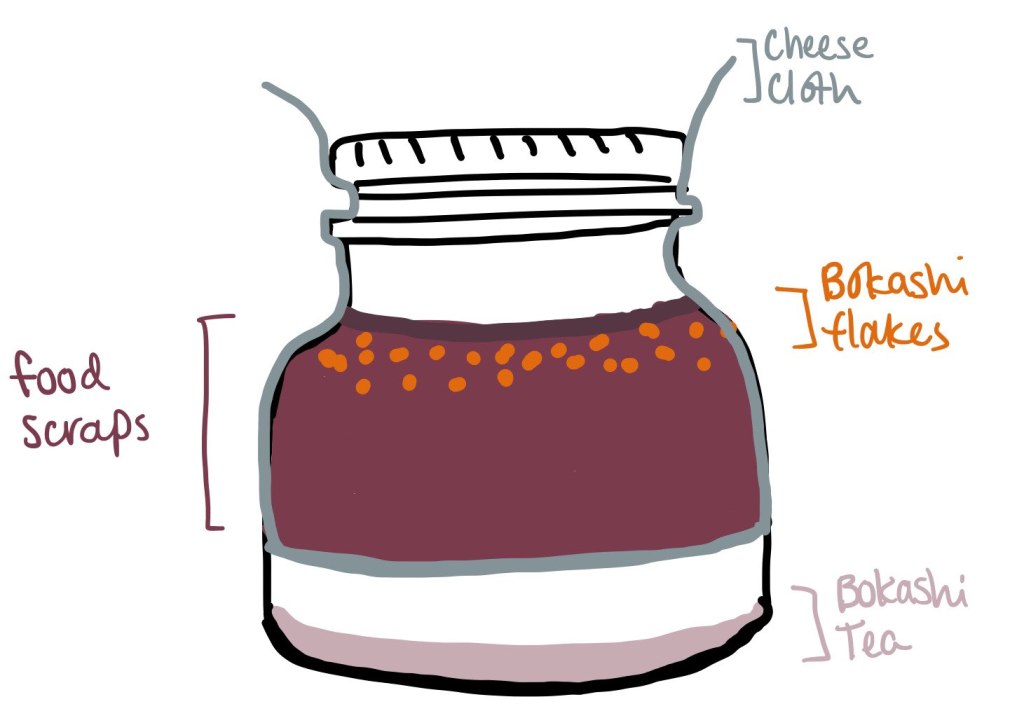
- Gather food scraps, cut into small pieces, combine, and drain any liquid
- Add Bokashi bran and mix to evenly coat the mixture
- Pack tigtly into container, seal, and store at 75-80°F
- Drain liquid every few days and restrict air exposure
- Bokashi composting is an anaerobic process, hence it’s fermentation
- The liquid (Bokashi tea) can be added to plants as liquid fermentation
- Time frame: minimum of 14 days depending on size of batch
- White/green mold is okay, black is not
- After time frame, dump and aerate
- Coming out of the container because it’s a fermentation process, the compost will look very similar to what it looked like at the beginning
- Let aerate and the compost will oxidize and darken
- Optionally use metal mesh to break down clumps
- Increases surface area to improve breakdown in soil
Work in Progress
A new post by Nampoina Randrianarivelo. Sign up to be notified when information launches.
 Nampoina Randrianarivelo